Sources: HubSpot. (2026), Finio, M., & Downie, A. (2026), Microsoft. (2026), McKinsey & Company
Artificial intelligence is already part of the operations of many companies. It is used to generate content, analyze information, automate tasks and, increasingly, execute entire processes through agents. That is why the discussion has started to shift: it is no longer just about adopting AI, but about making it truly work inside the business.
That is one of the central points of the new HubSpot report on AI in marketing, based on a survey of 1,205 professionals in the region.
The gap between those two figures shows where the real technology challenge lies today. Adoption has moved much faster than integration: companies already have access to the tools, but they are still working out how to connect them with their data, systems and processes so that they contribute something real to operations.
Do you really know the process you want to optimize?
This raises a question that goes beyond the tool being used. An AI can generate an answer in seconds, but its usefulness depends on the information it has available and the systems it can work with.
That is why integration is becoming a fundamental part of enterprise AI implementation. In its June 2026 article AI data readiness: The key to scaling impact, McKinsey notes that taking these technologies from pilots to at-scale applications requires, among other things, connecting structured and unstructured data within governed, reusable environments.
In practice, this means the value does not lie only in having a model, a copilot or an agent. It lies in making sure that technology can access the right information, understand the business rules and operate within the process where it is truly needed.
And that difference is especially relevant for technology companies that build AI solutions for other organizations: integrating a model or deploying an agent is only one part of the job. The real challenge is connecting that system with the information, rules and processes that determine how the business works.
When AI delivers results, the next question is how much
As artificial intelligence stops being an experiment and becomes part of operations, an inevitable pressure emerges: proving that the investment makes sense.
The good news is that teams are not ignoring that demand. Some 49% measure the impact of AI through pipeline or attributed revenue; 48% track engagement and conversion on AI-assisted content; 43% analyze cost per result or campaign; and 40% measure time saved on specific tasks. Only 4% say they do not measure any indicator.
The problem appears when that measurement capability is compared with planning:
There is a gap here that deserves attention: organizations are learning to measure the impact of AI, but not all of them have yet built the system to produce it consistently.
This connection between data, processes and use cases is also part of the challenge that McKinsey identifies when analyzing how ready organizations are to scale AI. The study argues that the availability of usable data, prepared for different use cases, is one of the elements that makes it possible to move from isolated experiments to applications with impact at scale. (Tavakoli et al., 2026)

The real leap: from using AI to working with agents
Unlike a chatbot or a model that waits for an instruction, an agent can execute tasks within a workflow: researching prospects using CRM data, personalizing communications, preparing reports or running stages of a campaign under previously defined rules. And marketing teams in LATAM are already moving in that direction.
The report also shows that professionals are not waiting for others to build solutions for them: 44% already build and customize their own agents, another 53% are experimenting with them, and only 3% prefer to wait. On this point, LATAM shows a particularly interesting dynamic: the share of marketers who build their own agents exceeds the global figure reported by HubSpot, which stands at 39%. Among those already working with agents, 94% report positive results.
This is precisely the ground where NGDS has focused much of its technology development, through G-Next, its artificial intelligence platform, which integrates voice agents, omnichannel text agents, analytics and self-service portals as a modular, end-to-end solution rather than as standalone tools. Each agent can be deployed independently or as part of an ecosystem connected to each organization’s CRM, ERP and legacy systems, precisely the kind of integration that the HubSpot report identifies as the real differentiator compared with simply adopting AI.
The main barrier is not budget. It is trust
When HubSpot asked what prevents organizations from scaling their use of agents, cost ranked below other factors:
The signal is clear: the challenge with agents is not only economic or technological. It is also one of trust. IBM notes that, as agents gain the ability to execute tasks and take actions within business processes, organizations need to establish management, oversight and control mechanisms that make it possible to understand what these systems do and under what conditions they can act (Finio & Downie, 2026).
A company may have access to an agent capable of executing a task in seconds and still not be ready to give it autonomy if it does not know what information the agent is using, how it makes its decisions, what its limits are or when a person should step in. That is why scaling AI should not be understood as giving a tool more and more freedom, but as better designing the relationship between automation and oversight.
AI First, Human First: automating the repetitive does not mean you stop verifying
This is precisely one of the ideas NGDS has been developing around its philosophy, AI First, Human First: using artificial intelligence to deliver speed, analysis and automation, while keeping human judgment where it truly matters. In this model, technology takes on repetitive tasks and large volumes of information, while specialists provide context, judgment and validation in the most complex cases.
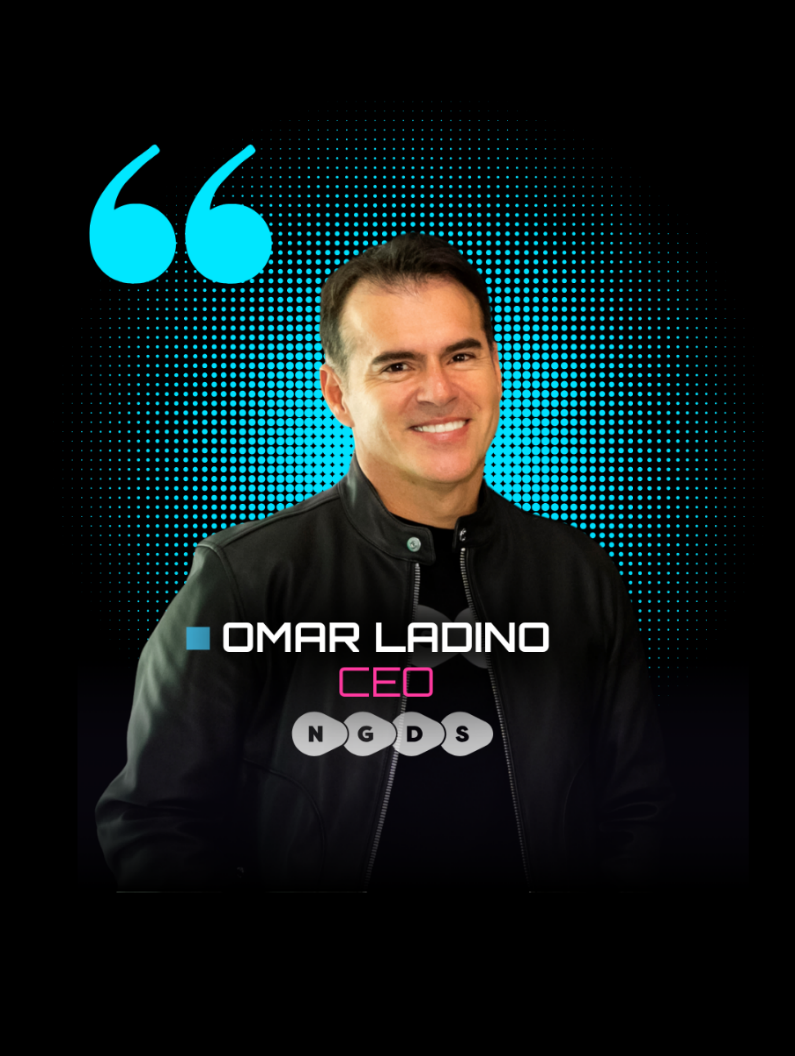
“Automation can take over mechanical, repetitive processes, but that does not mean everything an AI produces should be accepted automatically. Critical information must be verified, sensitive decisions must be supervised, and results that may have economic, legal, commercial or reputational consequences need a clear point of human validation.”
Omar Ladino · CEO of NGDSThe idea is not that a person has to review every task artificial intelligence performs, but to understand at which moments that intervention truly makes a difference. A repetitive task can be automated; a decision that involves judgment, an exception or a significant impact on the business requires a different level of attention.
In this sense, Human First does not mean placing limits on automation, but finding the balance between what technology can do on its own and where people’s experience remains essential.
From testing AI to finding where it truly adds value
The HubSpot report shows that companies in Latin America are already moving from experimenting with artificial intelligence to embedding it more and more in their activities. Teams are using these tools, creating agents and looking for new ways to automate their work.
What comes next is finding where that technology can truly add value. Not every company needs to do the same thing, nor does every process have to be automated in the same way. The key is understanding what each organization needs, what information it has available and where AI can help people work better.
That is, to a large extent, the view put forward by AI First, Human First: making the most of what artificial intelligence does well, without losing sight of what still requires people’s judgment and experience.
If your company is thinking about taking that step, contact us or visit us at ngds.ai.
Ready to take the next step?
An NGDS expert will contact you to learn about your case and propose a concrete solution.
Sources
- HubSpot. (2026). ¿Qué está pasando con la IA y los agentes en marketing en LATAM? Reporte 2026. HubSpot. https://offers.hubspot.es/reporte-ia-marketing-latam-2026
- HubSpot. (n.d.). Solutions Directory. HubSpot Ecosystem. https://ecosystem.hubspot.com/marketplace/solutions
- Finio, M., & Downie, A. (2026). What is AI agent management? IBM. https://www.ibm.com/think/topics/ai-agent-management
- HubSpot. (2025). The HubSpot Blog’s Marketing Leadership Report: How 720+ brand leaders will get ahead in 2025. https://blog.hubspot.com/marketing/act-like-a-leader-think-like-a-leader
- HubSpot. (2026). Reporte de IA en marketing LATAM 2026. HubSpot.
- Microsoft. (2026). AI agent shared responsibility model. Microsoft Learn. https://learn.microsoft.com/en-us/azure/security/fundamentals/shared-responsibility-ai-agent
- Microsoft. (2026). Apply responsible AI. Microsoft Learn. https://learn.microsoft.com/en-us/agents/center-of-excellence/responsible-ai
- Tavakoli, A., Goodman, B., Rowshankish, K., Reddin, S., Cartafina, C., & Muralidharan, M. (2026, June 23). AI data readiness: The key to scaling impact. McKinsey & Company. https://www.mckinsey.com/capabilities/mckinsey-technology/our-insights/ai-data-readiness-the-key-to-scaling-impact